Homemade Pie Crust

This homemade pie crust recipe uses a food processor to get the dough together in about 10 minutes with an hour of chill time. It’s forgiving enough on the first attempt and works well for holiday pies or quiche. Makes a double crust or two 9-inch single crusts.
This post may contain affiliate links. Please see our disclosure policy.

If making your own homemade pie crust is what’s keeping you from raising your hand to bring dessert for Thanksgiving or the holidays, this recipe takes the intimidation out of it. This is my go-to food processor method, which helps keep the butter cold with minimal handling. The dough comes together in minutes without a pastry blender.
This recipe is designed to make two 9-inch crusts or one double-crust, so it’s flexible enough to be used for any pie recipe you might be making. Use it for Sweet Potato Pie, Pecan Pie, or any holiday pie recipe you love. This crust is also the one I swap in for store-bought crust for my Broccoli and Cheddar Quiche recipe.
If you’re baking smaller pies, one batch makes enough for two 6-inch double-crust pies, like my Small Apple Pie. Divide the dough into quarters instead of halves.
Why a Food Processor Pie Crust
A pastry blender works perfectly fine, but a food processor cuts the butter into the flour quickly before it has a chance to warm up. Cold butter is what gives you flaky layers once the crust bakes, so anything that keeps it cold longer is working in your favor. Short pulses and ice cold water keep the butter from softening.
Ingredients You’ll Need
This recipe requires a short ingredient list of butter, ice water, flour, salt, and a touch of sugar.
You want to use very cold butter, straight from the fridge, cubed, and returned to the refrigerator or freezer while you measure the dry ingredients. You also want to chill water with ice cubes to get the coldest temperature possible.
How to Make Homemade Pie Crust
Cube and chill the butter. Cut the butter into small cubes and place it back in the refrigerator while you measure your dry ingredients. This helps it stay cold throughout the entire process.

Combine dry ingredients. Add flour, salt, and sugar to the bowl of a food processor. Pulse for a few seconds to mix.

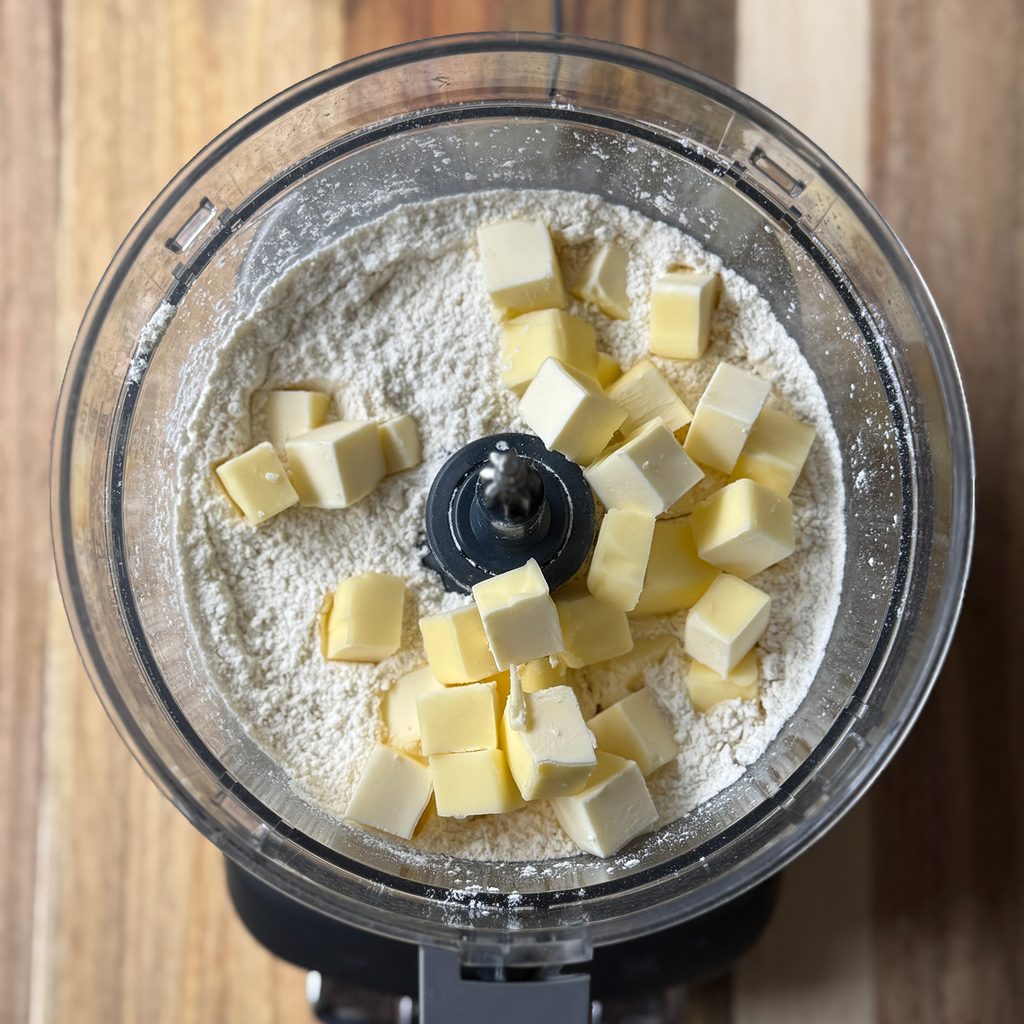
Cut in butter. Add cubed butter to the dry ingredients, and pulse in bursts. You want it to look like coarse sand with just a few pea-sized pieces of butter still visible. Don’t over mix, or you risk warming the butter from the heat of the machine.
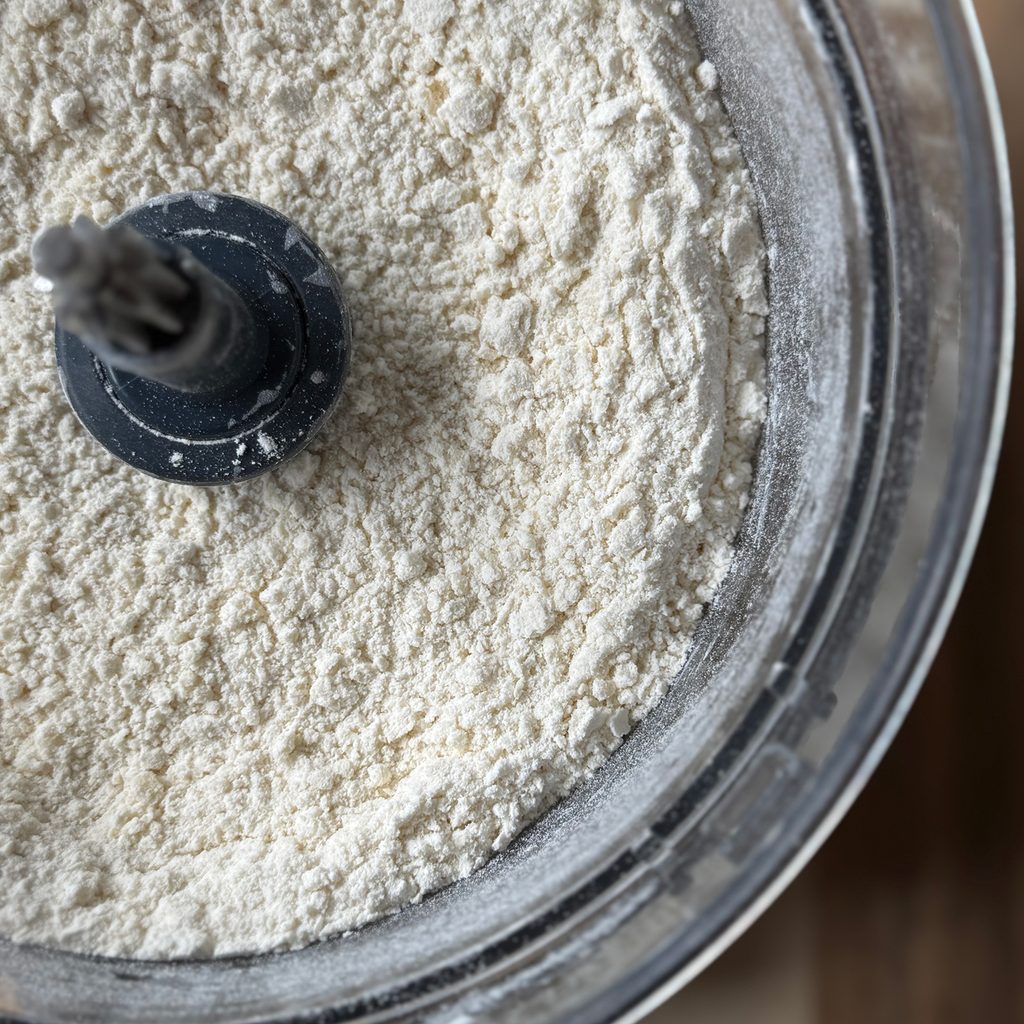
Add ice water in batches. With the food processor running on low (if it has speed settings), slowly pour in the water, no more than 2 tablespoons at a time. I usually only need ½ cup, so I stop there to check the dough. It’s ready when it starts to clump and holds its shape when pinched. It can still look a little crumbly, but it shouldn’t feel sticky.


Shape the dough. Turn the dough onto a clean surface, divide in half, and shape into flat disks. Wrap tightly in plastic wrap and refrigerate for an hour or more.

Roll it out. When you’re ready to bake, lightly flour a work surface. Unwrap the dough and gently roll it out, starting at the center and rotating your rolling pin to get an even layer, until you have about a 12-inch to 14-inch circle. You will likely have rough edges, which can be trimmed next.

Finish the crust. Transfer dough to a 9-inch pie pan, and trim or tuck the edges. I recommend using kitchen shears or a paring knife to trim the edges. Leaving a bit that can be tucked under itself allows for a sturdier edge for the crust.
Use your fingers, as shown below, to create a crimp. You also can use the tines of a fork to press down and secure the edges.

Once your crust is prepared to this point, follow instructions for the pie recipe of your choosing. Use a pie shield or tent the pie in the final minutes of baking if your crust starts to brown too quickly.


Homemade Pie Crust
Ingredients
- 2 ½ cups all-purpose flour
- 1 teaspoon salt
- 1 tablespoon sugar
- 14 tablespoons unsalted butter, very cold, cut into cubes
- ½ to ⅔ cup ice water, see notes
Instructions
- Cube the butter and put it back in the fridge (or freezer for 10 minutes) while you measure everything else. It needs to stay cold through the whole process.
- In the bowl of a food processor, combine the flour, salt, and sugar. Pulse a few times, just until mixed.
- Add the cold butter cubes. Pulse in short bursts, 4 to 6 pulses at a time, until the mixture looks like coarse sand with some pea-sized pieces of butter still visible. Don't overdo it here. Those butter pieces are what give you flaky layers.
- With the processor running on low, slowly pour in the ice water a couple tablespoons at a time through the feed tube. Stop and check after ½ cup. The dough is ready when it starts to clump together and holds its shape when you pinch it. You may not need the full ⅔ cup, depending on humidity.
- Turn the dough out onto a clean surface. Divide it in half and shape each half into a flat disc. Wrap each in plastic wrap.
- Refrigerate for at least 1 hour, or up to 2 days. This lets the gluten relax and the butter firm back up, both of which make the dough easier to roll and the crust more tender.
- When ready to bake, roll out one disc on a lightly floured surface to about a 12-inch circle. Transfer to your pie dish. Cut, fold, and crimp the edges as desired. Repeat if you're making two pies or roll out for a top crust, if your recipe calls for it.
Notes
- For the ice water, add a few cubes of ice to a glass and fill with cold water. Strain that water to ensure you have the coldest water possible to keep the butter firm.
- If making two single-crust pies (like Sweet Potato Pie and Pecan Pie side by side), this recipe covers both without any leftover scraps.
- For two 6-inch double-crust pies, like my Small Apple Pie, divide the dough into quarters instead of halves.
- This recipe works well for quiche or a double-crust fruit pie, as well
- Dough can be frozen, well wrapped, for up to 3 months. Thaw overnight in the fridge before rolling.
 Like this? Leave a comment below!
Frequently Asked Questions
It depends on the recipe. Some fillings, like quiche, may call for a short blind bake, while a pie that bakes for a longer time, like pecan pie, cooks the crust through on its own. Follow the instructions in your pie recipe.
Absolutely. This dough can be swapped in for any recipe that calls for a frozen or store-bought crust. Roll it out and use it the same way you would use a pre-made pie shell. It’s the crust I use in my Butternut Squash Quiche, which bakes in an unbaked shell, with par-baking as an option.
You can cut the recipe in half to get the same results. You can also make the full batch and freeze the second disk for later (see the make-ahead answer below). Leftover dough works for a galette or savory hand pies, too.
Yes. Refrigerate the dough for up to 2 days, or freeze it for up to 3 months. For freezing, wrap it tightly in plastic, then place it in a freezer-safe container. Thaw frozen dough overnight in the refrigerator before rolling. This makes it a great recipe to get ahead of for Thanksgiving or holiday baking.
You likely need a little more water. Add ice water about 1 teaspoon at a time, pulsing briefly between additions, until the dough clumps when pinched. If it cracks when you roll it, let the disk sit at room temperature for 5 to 10 minutes.
You likely added too much water, or the butter warmed up while mixing. Start with very cold butter and pulse in short bursts. Then chill the wrapped dough for at least 1 hour so it firms back up. If it’s still sticky when you roll it, sprinkle a little extra flour on top of the dough and on your work surface.


